
Update 033.
Materials Matter

Do the materials we use in our everyday products really matter?
It’s easy to get bogged down in the detail when it comes to understanding the impact of our design decisions. This can result in many of us feeling out of our depth and sometimes overwhelmed.
Designers have the opportunity to play a key role in impacting more positively on the planet - with the caveat of course that most designers are not the ultimate decision makers. We have the ability to propose better solutions but shouldn’t beat ourselves up by factors outside of our control.
Sustainability is something I have written about before (and no doubt will again!). If you’re interested in reading my broader thoughts, check this out. Today we’re zooming in though and focussing on materials and why they matter.
Do Materials Matter?
A 2020 study compiling 866 product carbon footprints revealed a clear picture of where emissions are concentrated. On average:
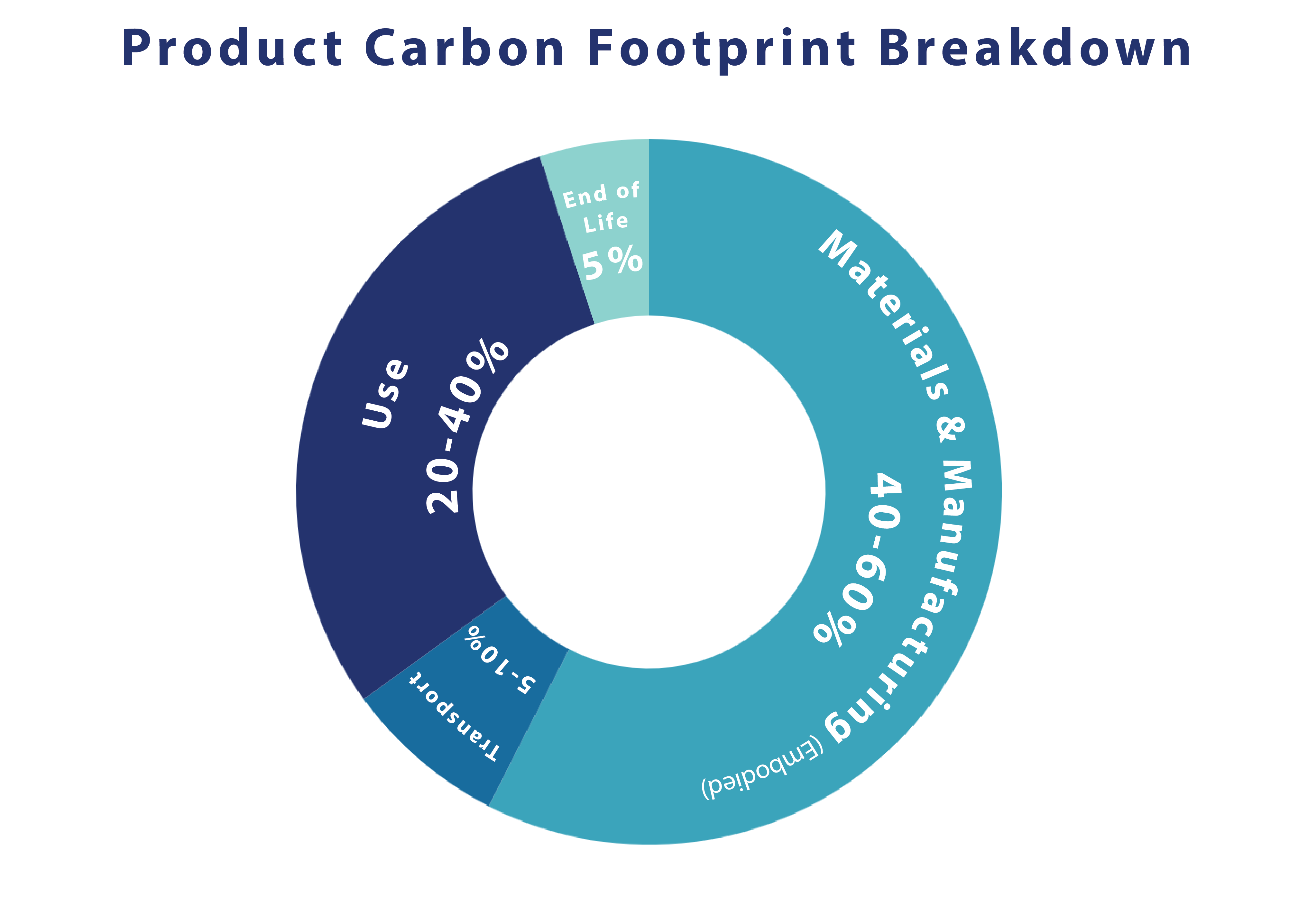
40-60% of a product’s total carbon footprint is associated to materials and manufacturing (embodied carbon). This includes everything from:
Raw material extraction
Material processing (smelting, polymerisation, refining)
Manufacturing & assembly
Packaging
Of this 40-60%, it’s estimated that 70-90% of this is associated to materials. In other words, material choice accounts for 28-54% of a products overall carbon footprint. That’s potential for huge impact!
Beyond the Science
Let’s be honest though - a material choice goes far beyond pure environmental impact.
Carbon metrics matters. Lifecycle assessments matter. Materials are not just numbers in a spreadsheet though - they are signals. They communicate to us before we even touch them.
Materials imbue value.
Over millennia, we’ve built deep cultural associations with them. Stone suggests permanence. Bronze suggests legacy. Solid hardwood suggests craftsmanship and care. Polished stainless steel implies hygiene and precision. Soft-touch silicone feels contemporary and accessible. Even plastic (depending on context) can signal either disposability or democratic design.
These meanings weren’t invented by marketing departments. They evolved through architecture, tools, jewellery, furniture, objects of ritual. Through use, status, scarcity, durability, and craft.
This is why product design has an entire discipline dedicated to CMF (Colour, Material, Finish).
CMF isn’t decoration. It’s psychology.
It’s anthropology.
It’s storytelling through surface and substance.
A bead blasted finish feels different from a high-gloss finish.
A visible grain tells a different story than a uniform moulded part.
A cold metal touchpoint signals something entirely different from warm timber.
These signals influence perceived value, longevity, and care.
A product that feels precious is treated as precious.
A product that feels disposable is treated as disposable.
This is where sustainability becomes more nuanced.
You can choose a lower-carbon material but if it feels cheap, fragile, or culturally “low value,” it may be discarded sooner. Lifespan is one of the most powerful levers in reducing the total carbon impact.
Conversely, a slightly higher-impact material that creates attachment, durability, and longterm use may outperform a technically “greener” alternative over time.
So the question isn’t just:
What is the carbon footprint of this material?
It’s also:
What story does it tell? How long will someone keep it? Does it age well? Does it feel worthy of care?
Sustainability lives at the intersection of science and meaning.
We can quantify embodied carbon.
But we also design for emotion, perception, ritual, and cultural memory.
I believe that the most powerful products sit where those two worlds meet.
A Playful Example
if you have been reading my updates for a while, you may have come to realise I drink a lot of coffee! With an 18g espresso each time, I likely go through 25kg+ of coffee annually. That’s a lot of a spent beans going to waste and I’m just one person. Imagine a coffee shop! Spent grounds can be a great addition to your compost but this needs to be done in balance so as not to overly effect the PH level or nutrients in your soil. So what else could we be doing with coffee waste?
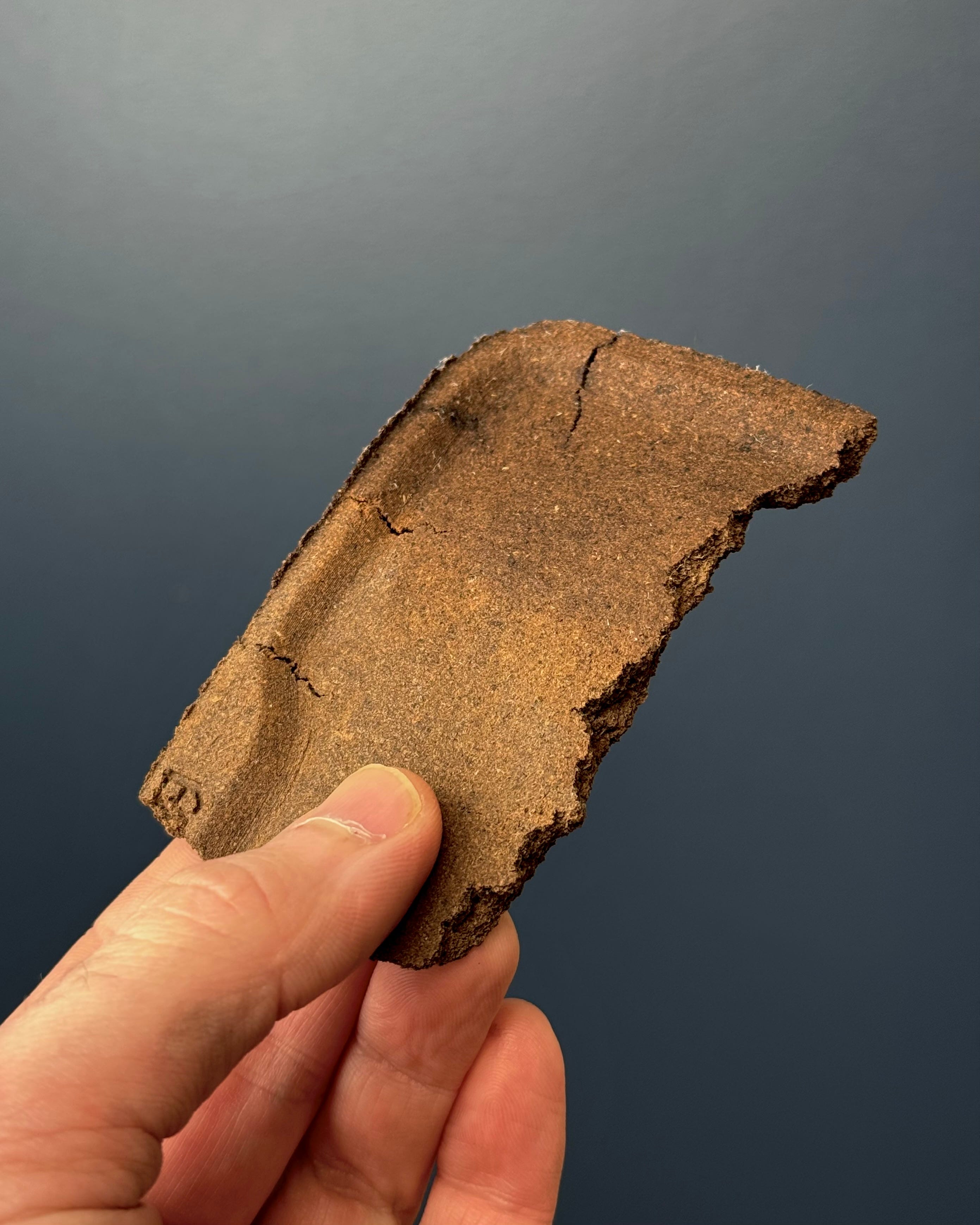
Years ago, I ran a series of experiments to see if I could add coffee grounds to basic bio-plastic recipe’s to create a textural coffee bio-plastic. The results were rough at first, but over time, I could see the material’s potential. Fast forward to today and companies like Kaffeeform are turning spent coffee into tangible, desirable products, like coffee cups. Proof that waste can become something people cherish.

What if we could collect coffee waste from coffee shops and create products that actively support our environment. Something like a bird feeder. Something like this.

This is a simple bird feeder I have been playing with over the last month. Clean, playful and hopefully perceived as a celebration of the coffee bioplastic material as a premium material. Something you would want to take care of. It would clearly need refined but I feel like its got legs (or wings perhaps?).
With a focus on materials, if this coffee-based bioplastic concept replaced a traditional plastic and metal wire bird feeder, there would be the potential to reduce the overall product carbon footprint from around 5.5kg CO2e to around 1.7kg CO2e - a reduction of nearly 60%, purely thanks to materials choices.
Materials really do matter.
Want to know how I created the visuals for this bird feeder? Make sure to read to the end
Want to listen to this update as a podcast?
Try listening to this month’s update as a podcast below and let me know what you think. I have been testing the water with notebooklm for a year now and it keeps getting better.
Don’t forget, help me to spread the reach and get more products off the ground by getting your friends and family to sign up below :)
My Products, My philosophy
I find myself more driven than ever to put thoughtful, meaningful products out into the world that don’t compromise on quality. The type of products people want to own and help in some way.
Too often we find ourselves in autopilot, trying to complete the never ending to do list we really don’t stand a chance of ever getting to the bottom of.
I want to design products that intentionally take us out of auto-pilot. That incense holder that sits next to you throughout the day, reminding you to take a break. The coffee cup that feels just right in the hand and encourages you to savour every sip.
Objects designed to help you notice the moments you’re in. Start your 2026 right and support a small independent designer :)


As a thank you, you can use this discount code at checkout (available site wide): SubstackCrew (10% off).

Last months most clicked link: Jacques Monneraud coffee cups.
My top 5 pieces of content I have found helpful/inspiring:
1.
Integrating compostable materials into tech products. Leveraging a new plant based, home compostable plastic (bamboo-O) for use in a portable charger. Why use forever materials in a product designed to last a few years?
2.
Project Vesta. Olivine, a naturally occurring mineral, can capture CO2 and transform it into stable minerals - essentially one of the best materials for pulling CO2 out of the environment. Having come across this material a few months back, I am always excited to see real world applications!
3.
Material Matters. Carole Collet on the magic of mycelium and regenerative design. A powerhouse of a podcast for anyone interested in materials.
4.
Tapei 101. You’ll have come across this one way or another. Nail biting stuff from Alex Honnold (Free Solo) and a testament to the power of mind of body.
5.
Lessons Learned Shipping 500 Units of my First Hardware Product. Making hardware is hard and this honest reflection takes you behind the scenes for all the trials and tribulations first hand.

How I visualise early concepts
I can’t tell you how many hours I have lost to developing my ability to realistically visualise my design ideas. I have always enjoyed rendering and since moving to Keyshot over 13 years ago, I was drawn in by the ability to quickly visualise 3D models. I was a relatively early adopter of Keyshot and remember colleagues would often ask how I was able to pull together impactful visuals on the day of a client meeting. They weren’t marketing ready visuals, but enough to communicate the design intent with clarity.
I joke with my students when teaching them Keyshot that when I learned to render at University (not that long ago!), real time ray tracers weren’t a thing and you had to render out your scene to see any changes you made to materials and lighting (which would typically take at least 3 hours!). Keyshot changed the game with product visualisation.
This feedback loop between designer and client drew me in. It has become a critical tool in my arsenal to communicate design intent. there has always been a tussle however between good and a good enough. It can take 10 minutes to produce a visual that is good enough but hours to produce a visual that is good. I have been keeping a very close eye on developments around AI tools and have tested more than I care to admit. The one tool I keep coming back to though is Vizcom.
Having played with Vizcom for a few years now on and off I want to share a little behind the scenes process that has begun to deliver consistent results for me. For anyone that has toyed with AI tools, you’ll appreciate the frustrations around consistency!
I can now go from print screen to photorealistic in context shot inside 15 minutes. This used to take hours (spread across multiple days) and honestly… I couldn’t deliver the level of realism I can get here. It doesn’t work with every type of product, but for simplistic, form driven products it’s a dream. Particularly where you want to communicate narrative - like this bird feeder.
I start off with my CAD model - there will always be a need to 3D model! From here, I apply basic materials and lighting to define the CMF. A short render later and I have my starting point. From here, I would typically use an LLM (chatGPT or google Gemini) to create a contextual reference. Inside Vizcom, using a quick prompt in pro mode, I can replace the product in the contextual reference with my rough rendered product. The materials and product form get pulled through but incredibly will be upscaled and relit to perfectly match the reference.
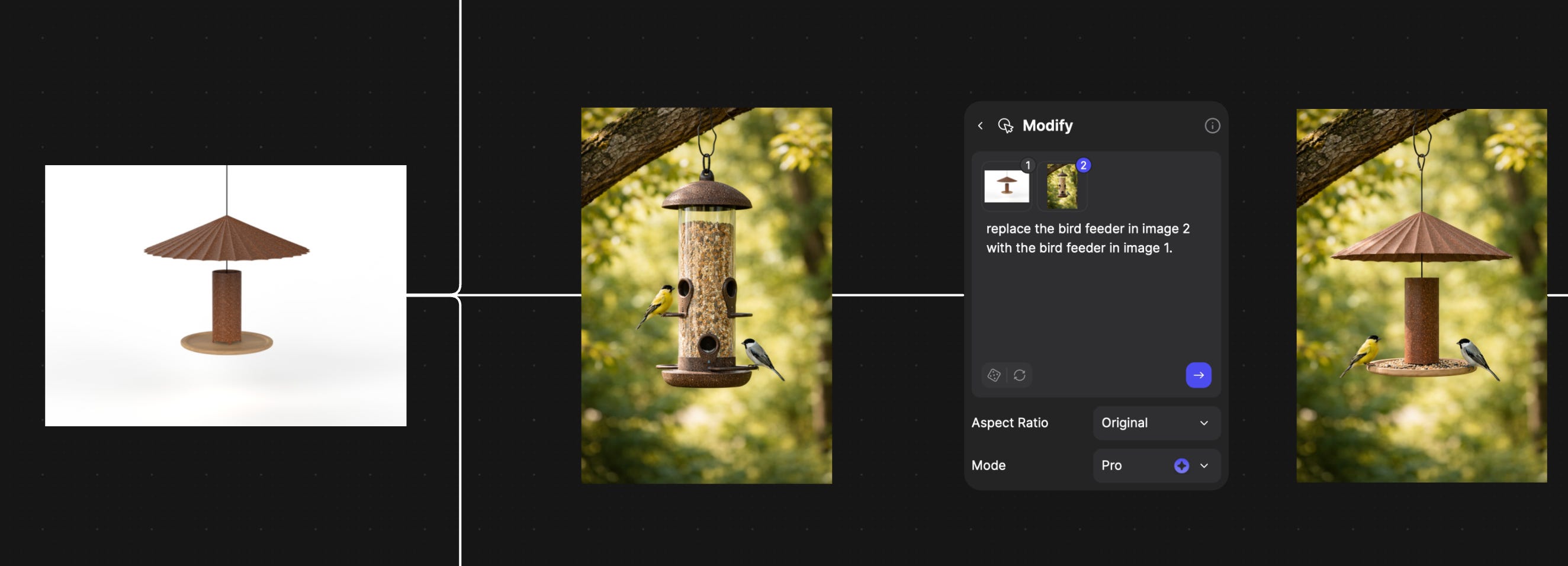
Some of the latest updates in Vizcom really help to bring a level of control that simply didn’t exist before. Using the paint tool in Vizcom, I can quickly identify areas I want to change with a red marker (like the way the feeder connects to the tree in the above). The adaptive canvas tool works like adaptive fill in photoshop, allowing you to simply drag and change the canvas size, filling in the missing areas of the image. At this point, I had my hero shot, birds and bird feed included.

A few close up’s to try and sell the realism:

A simple prompt with clear guidance to create a calm animation:

And finally, some testing to communicate how the product could be refilled with seed:
It’s not perfect, but it’s certainly good enough!
This level of deep dive isn’t something I typically showcase here and I know using AI can be a polarising topic but I’d be keen to hear if you feel hearing about this is of value to you?
Concerns around AI are totally valid and I know the design world is divided here. Personally, the tools I learn serve as a means to explore and express my creative intent. Vizcom in particular is enabling me to visualise design ideas in a way I simply didn’t have access to before. If we can solve the challenges around resources use and have creatives fairly compensated for having their work used in any training data - we’d be living in a much more compassionate world.
Great post Ben!
I’ve been thinking about materials a lot in these days, especially in how to communicate the qualities of those now that most products are sold via online shops.
Also the Vizcom part is very interesting, I was evaluating the use of it for my design students. It looks like it works very well to give context to products. Have you tried it for the brainstorming phase?